Baobab Life Tree

Margot
| 27-10-2026
 · Plant Team
Dear Lykkers, have you ever wondered how a tree can help people and animals survive beneath the hot African sun? The baobab is a remarkable plant with a thick trunk, nutritious fruit, and an unusual ability to cope with dry weather.
Often called the “Tree of Life,” it provides valuable resources in places where water and food can become difficult to find. Let’s discover how this extraordinary tree supports life across African grasslands.
A Tree with a Remarkable Shape
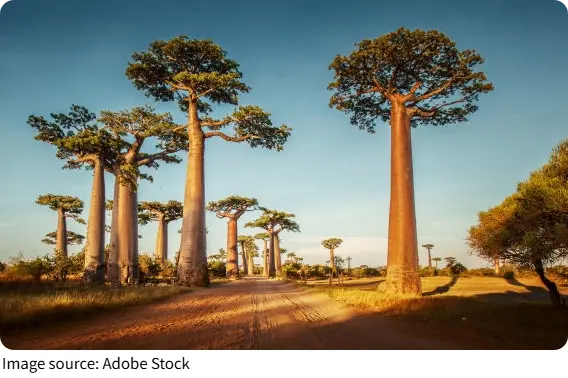
The baobab grows mainly in tropical and subtropical parts of Africa. Some reach around 20 meters tall, with enormous trunks and branches clustered near the top. From a distance, their shape can resemble a giant standing upside down, with roots pointing toward the sky.
These trees can grow in sandy or clay-rich soil and tolerate high temperatures. Some species also survive cooler conditions for short periods, although their needs vary by location. Certain baobabs live for many centuries, and some may exceed a thousand years. Their impressive lifespan reflects their ability to adapt to changing conditions.
How the Trunk Stores Water
The baobab’s thick trunk is one of its most useful features. Its inner tissues are relatively soft and fibrous, allowing the tree to hold substantial amounts of water. During rainy periods, its roots absorb moisture, helping build reserves that can support the plant when rainfall becomes scarce.
When the dry season arrives, the tree draws on these reserves to maintain essential functions. It can also shed its leaves, reducing the surface through which water escapes. With fewer leaves exposed to sunlight and wind, moisture loss decreases, helping the plant endure long periods without rain.
However, the baobab still depends on suitable growing conditions. Severe or prolonged drought can affect its health, and its stored water is primarily an adaptation for its own survival rather than an unlimited supply for surrounding communities.
Nutritious Fruit for Wildlife and People
Baobab fruit develops inside a hard outer shell. As it matures, the shell becomes firm, while the pulp inside dries into a pale, powdery material. This natural structure helps protect the fruit and makes its contents easier to store.
The pulp has a tangy flavor and contains vitamin C and dietary fiber. People can eat it directly or mix it with water to prepare refreshing drinks and other foods. Its nutritional value makes it a useful addition to local diets, especially when fresh produce is less available.
Monkeys and other animals feed on baobab fruit, while elephants may eat parts of the tree. These food sources connect the baobab with the wider ecosystem. Local communities also gather the fruit for household use, making the tree valuable to both wildlife and people.
Useful Materials and Natural Shelter
The baobab offers more than food. Its fibrous bark can be processed into rope, baskets, mats, and other practical items. These materials have supported traditional crafts and everyday activities in communities across parts of Africa.
Some old baobabs develop large hollow spaces inside their trunks. In certain places, people have adapted these spaces for storage or other purposes. However, not every tree is suitable, and cutting into a living trunk can cause damage. Careful use and protection help preserve these remarkable plants for future generations.
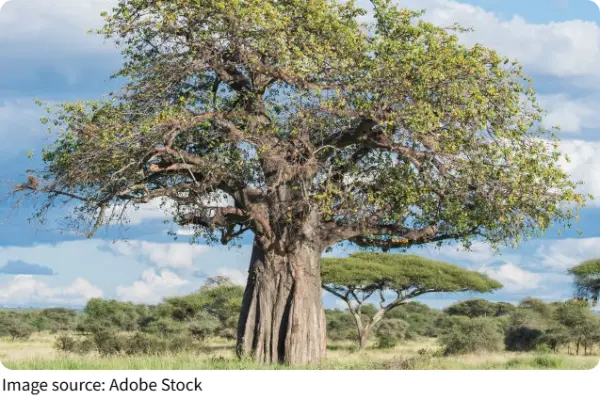
Their broad branches also provide shade from intense sunlight. Birds and other creatures may use the tree for shelter, while its flowers and fruit contribute to the local environment. A mature baobab can become an important landmark in an open landscape.
Why Growing Baobabs Elsewhere Can Be Difficult
Although baobabs offer many benefits, they cannot thrive in every climate. They need suitable temperatures, sunlight, soil, and seasonal conditions. Cold winters or excessive rainfall may make some regions unsuitable for outdoor cultivation.
People can grow baobabs in warm areas outside their native range, but success depends on the species and local environment. In cooler places, young trees may need container growing and protection from low temperatures. This explains why introducing the plant to another country does not always reproduce the conditions in its natural habitat.
Final Thoughts
The baobab earns its name, the Tree of Life, through its many contributions. It stores water for its own survival, produces nutritious fruit, feeds wildlife, provides useful materials, and offers welcome shade. Its unusual shape and long lifespan also show how plants can adapt to demanding environments.
Dear Lykkers, which feature interests you most: its water-storing trunk, its nutritious fruit, or its many practical uses? Share your thoughts and consider how protecting these remarkable trees can help preserve local ecosystems and valuable natural resources.
Baobab Tree: The Giant of Africa 🌳 | Amazing Facts About This Ancient Tree
Video by THE DAILY BOTANIST 🍀