Squash Skill Play

Amit Sharma
| 18-06-2026
 · Sport Team
Hey Lykkers! If we are looking for a fast, exciting indoor sport that keeps both the body and mind active, squash is a great choice. It is played by hitting a small ball against a front wall, and the ball keeps bouncing back for continuous rallies between two players.
At first glance, it may look intense, but once we break it down into simple steps, everything becomes easier to understand. In this guide, we will go through the essential skills together, including grip, serve, hitting technique, ball placement, movement, and basic equipment. Let’s get started in a clear and practical way.
Grip Control: Building the Foundation of Every Shot
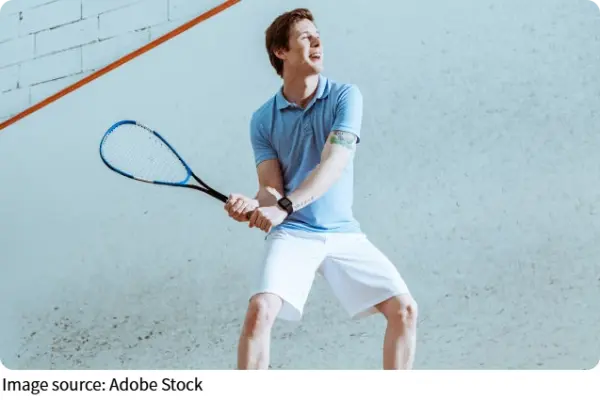
A strong grip gives us better control of every swing. We hold the racket so that the thumb and index finger form a relaxed “V” shape along the side of the handle. The remaining fingers wrap naturally around the grip without squeezing too tightly.
The hand should rest near the middle of the handle. This helps balance the racket and makes switching between forehand and backhand smoother. If we hold it too tight, movement becomes stiff. If it is too loose, accuracy drops. A steady but relaxed grip helps us respond quickly during fast rallies.
Serve Basics: Starting the Rally With Confidence
The serve is where every rally begins, so it plays an important role. We place one foot inside the service box without touching the line. If the foot touches the boundary, the serve becomes invalid.
We stand sideways, with the shoulder facing the front wall. The ball is dropped slightly away from the body, around arm’s length distance, and then struck directly toward the front wall. A clean and accurate serve can give us an early advantage because the opponent can only return the ball after it rebounds.
Hitting Technique: Timing and Balance Matter
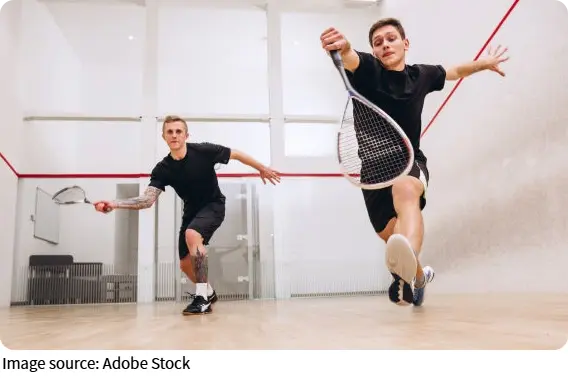
When hitting the ball, timing is more important than power. We prepare by bending the knees slightly, relaxing the body, and keeping the feet shoulder-width apart. The body stays aligned with the side wall for better stability.
The goal is to hit the ball before it drops too low. This keeps the rally fast and gives the opponent less time to react. Different swing styles can create different ball paths, allowing us to adjust depending on the situation during play. The more we practice timing, the smoother our shots become.
Ball Placement: Changing the Flow of the Game
Where we aim the ball on the front wall changes the rhythm of the entire rally. A low target, just a few centimeters above the ground, is often used for aggressive shots that can end the rally quickly if placed correctly.
A mid-level target, usually around 30 to 60 centimeters from the ground, is easier to control. It is ideal for maintaining longer rallies and improving consistency. By learning different target zones, we can better control the pace of the game and adapt to different opponents.
Footwork: Staying Fast and Balanced
Footwork is just as important as racket skill. We use small, quick steps to move around the court, including side steps, backward steps, and light adjustment steps. Large strides are avoided because they slow reaction time.
Good movement helps us reach the ball earlier and recover quickly after each shot. When footwork is efficient, the body stays ready for the next direction change. This makes the game feel smoother and more controlled, even during fast exchanges.
Basic Gear: Simple Tools to Get Started
To begin playing, we only need a few basic items. A squash racket is essential, but it does not need to be expensive. A standard squash ball is also required, and protective eyewear is highly recommended to keep the eyes safe during fast rallies.
If the racket handle feels slippery, adding a grip cover can improve comfort and control. These simple tools help us focus more on learning skills rather than worrying about equipment issues.
Let’s Step Onto the Court Together
Squash is a sport that becomes more enjoyable as we practice. Each skill—grip, serve, timing, placement, and movement—works together to build a smoother and more confident playing style.
We do not need to master everything at once. With steady practice, every rally becomes an opportunity to improve. So Lykkers, are we ready to step onto the court and try these techniques? Let’s keep learning, keep moving, and enjoy every moment of the game together.
HOW TO PLAY SQUASH | A Beginner's Guide
Video by Zoe Aust