Set Sail, Feel Free

Pankaj Singh
| 25-04-2026
 ·
· There's a particular kind of quiet that only exists at sea. Not silence exactly — the waves are always talking, the wind is always doing something, seagulls are wheeling overhead like they own the sky.
But underneath all of that, there's a stillness that gets into your chest and just... stays. If you've ever stood at the railing of a boat, barefoot on warm wood, watching another vessel cut through blue water in the distance, you already know what I mean. And if you haven't — well, that's what this is about.
Why the Ocean Does Something to Your Brain
Marine biologist Wallace J. Nichols wrote an entire book about it called Blue Mind — the idea that being near, in, or on water triggers a mild meditative state in the human brain. Your heart rate drops. Your cortisol levels follow. The constant visual movement of waves actually occupies just enough of your attention to quiet the mental chatter that follows most of us around on land. It's not nothing. It's neurologically measurable.
On a boat specifically, the effect compounds. You're moving with the water, not just watching it. The gentle rocking — once your body adjusts — becomes its own kind of rhythm that syncs with your breathing. People who sail regularly often describe sleeping better at sea than anywhere else. Deep, heavy, dreamless sleep that leaves you feeling like a different person by morning.

What a Sea Journey Actually Looks Like
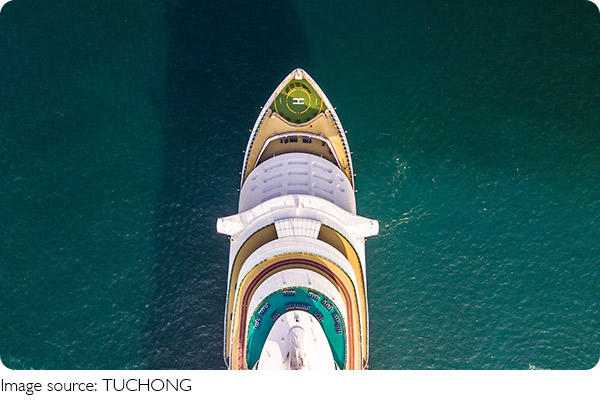
Forget the image of rough seas and seasickness for a moment. Most leisure sailing and cruise experiences run through calm, protected waters — the Mediterranean, the Caribbean, the Greek islands, the coast of Norway. The kind of blue you see in this illustration: rich, almost unreal, with clouds so white and full they look painted.
On a smaller sailing vessel, days have a natural rhythm. Morning mist burns off by 9 AM. By midday, you're finding shade and watching flying fish skip alongside the hull. Late afternoon, the light goes golden and the seagulls reappear, curious and loud. Evenings bring a sky full of stars with zero light pollution, which on its own is worth the trip.
How to Actually Book This Kind of Trip
You don't need to own a boat or know how to sail. There are several practical options:
• Bareboat charter: You rent the vessel and captain it yourself (requires sailing certification). Costs typically run $800–$2,500 per week depending on boat size and location.
• Skippered charter: A captain comes with the boat. You just show up and enjoy. Prices start around $1,500–$4,000 per week for a group.
• Small-ship cruises: Companies like Windstar Cruises or UnCruise Adventures run intimate voyages (100–300 passengers) that feel nothing like a giant cruise ship. Fares range from $2,000–$5,000 per person for a week, depending on the route.
• Sailing schools with live-aboard courses: Learn to sail while actually sailing. Programs in places like the British Virgin Islands or Croatia run $1,200–$2,500 for a week and you leave with a certification.
The Mediterranean sailing season generally runs spring through early autumn, with the Greek islands and Croatian coast being perennial favorites for first-timers.
What to Pack and What to Leave Behind
The golden rule of boat packing: soft bags only. Hard suitcases don't fit in the narrow storage spaces below deck. Keep it light — a few linen or cotton pieces, a good hat (exactly like the straw one in the image — not just stylish, genuinely necessary), reef-safe sunscreen, and a light waterproof layer for the occasional spray.
Leave behind: your schedule, your need for Wi-Fi, and any idea that you need to be doing something every moment. The sea has a way of curing that particular anxiety faster than you'd expect.
There's a reason sailors talk about the ocean the way other people talk about falling in love. It gets into you. And once it does, every landlocked week afterward feels just a little bit like waiting to go back.