Green Decor Guide

Ravish Kumar
| 24-04-2026
 · Lifestyle Team
A room with plants can feel either effortlessly refined or strangely cluttered—and the difference is rarely about how many plants you own.
It's about how they are combined, positioned, and scaled. Indoor greenery works best when treated as part of the overall design system, not as isolated decoration.
Start With a Visual Structure
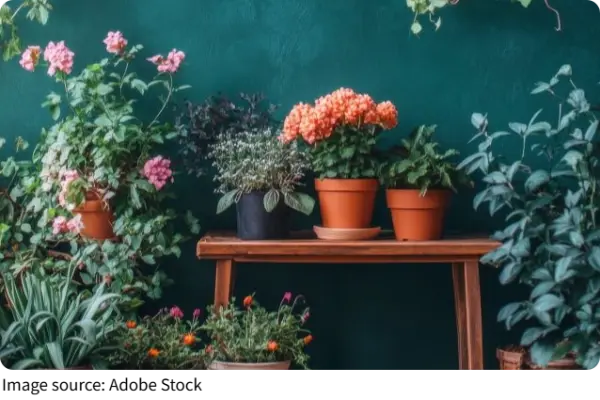
Before placing any plant, think in layers. A well-balanced space usually includes three visual levels: floor, mid-level, and eye-level.
• Floor level: large plants anchor the space
• Mid-level: medium plants sit on tables or stands
• Eye-level: hanging or trailing plants add movement
This layering prevents the room from feeling flat and creates a natural visual flow.
Mix Sizes for Depth
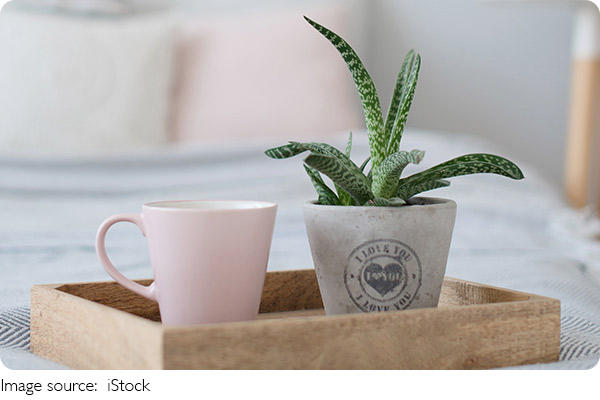
Using plants of similar size often makes a space look repetitive. Variation creates depth and interest.
1. Pair one large statement plant with two or three smaller ones
2. Keep height differences noticeable, not subtle
3. Avoid placing equal-sized plants side by side
For example, a tall Fiddle Leaf Fig can be complemented by smaller tabletop plants to balance scale.
Combine Different Leaf Shapes
Texture matters just as much as size. Mixing leaf shapes prevents visual monotony.
• Broad leaves create bold visual blocks
• Thin or spiky leaves add contrast
• Patterned foliage introduces detail
A combination like Monstera with a more delicate plant such as Calathea creates a balanced composition.
Use Position to Guide the Eye
Plants can direct how people visually move through a room.
• Place taller plants in corners to frame the space
• Use trailing plants like Pothos on shelves to soften edges
• Position medium plants near seating areas to create a sense of closeness
Avoid placing all plants against walls—bringing some forward adds dimension.
Keep Color Consistent
Green comes in many shades, from deep tones to lighter hues. Mixing too many variations without intention can feel chaotic.
• Stick to one dominant tone (deep green or light green)
• Add one contrasting plant for emphasis
• Match plant tones with furniture colors for cohesion
This approach keeps the room visually calm.
Choose Containers That Match the Space
Containers should support the design, not compete with it.
• Neutral ceramic pots work in most interiors
• Matte finishes create a softer look
• Textured containers add subtle detail without distraction
Keep consistency in color or material when grouping multiple plants.
Balance Empty Space
A common mistake is overfilling a room with greenery. Plants need space to stand out.
1. Leave gaps between plant clusters
2. Avoid filling every corner
3. Let larger plants act as focal points
Negative space enhances the impact of each plant.
Adjust Based on Light
Placement is not only about design—it must also support plant health.
• Bright areas suit statement plants
• Low-light corners are better for tolerant species like Snake Plant
• Rotate plants occasionally for even growth
A healthy plant always looks better than one forced into the wrong spot.
When Everything Feels Connected
Well-arranged plants don't draw attention individually—they work together to shape the atmosphere. The room feels layered, balanced, and intentional, as if each element naturally belongs.
Greenery, when placed thoughtfully, becomes more than decoration. It becomes part of the space's rhythm, quietly guiding how the room is experienced.