Skateboard Like a Pro!

Raghu Yadav
| 29-01-2026
 · Sport Team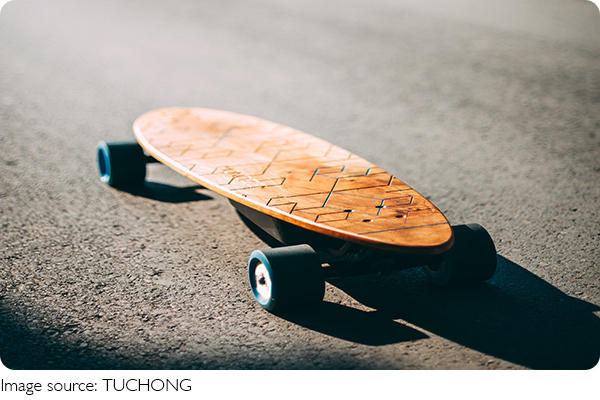
Skateboarding is more than just a sport—it’s an art form, a lifestyle, and a test of balance, coordination, and creativity.
Riding like a professional requires patience, practice, and an understanding of both technique and body mechanics.
Start with Proper Stance and Balance
The foundation of professional skateboarding begins with stance. Your body position directly affects stability, maneuverability, and control. There are two primary stances: regular (left foot forward) and goofy (right foot forward). Determining which feels natural is essential before attempting advanced maneuvers.
When riding, keep your knees slightly bent and your weight centered over the board. Relax your shoulders and avoid leaning too far forward or backward, as this can compromise balance. Engaging your core muscles helps maintain control while moving at varying speeds or performing tricks. Foot placement matters as well: your front foot should be near the front bolts of the board, while your back foot rests on the tail, ready to pivot or push.
How to PUSH Like A Pro Skater (and NOT Look Awkward!)
Never Stop Improving
Learn to Push and Control Speed
Professional riders control speed with precision rather than relying solely on force. Pushing off with the back foot while keeping your front foot steady allows for smooth acceleration. Short, controlled pushes maintain balance, while longer pushes increase momentum.
Braking is equally important. Beginners often rely on dragging a foot, but pros use weight shifts and subtle tail taps to decelerate smoothly. Carving, or making wide, S-shaped turns, is an advanced technique to control speed on declines while maintaining balance and flow. Practicing speed control in safe environments, such as empty parking lots or skate parks, builds confidence and responsiveness.
Master Turning and Carving
Turning is essential for navigating ramps, streets, and obstacles. Lean into the direction of the turn while keeping knees bent to maintain stability. Your shoulders should guide your movement; rotating your torso in the desired direction helps the board follow naturally.
Carving involves smooth, rhythmic turns that allow continuous motion without abrupt stops. This technique is particularly useful for ramps, bowls, and longboarding, giving a sense of fluidity that is characteristic of professional riders. Developing carving skills improves board responsiveness and enhances the rider’s ability to maintain speed and balance in complex terrain.
Develop Core Tricks Gradually
Professional skateboarding isn’t just about riding—it’s about executing tricks with precision. Start with foundational maneuvers such as the ollie, kickturn, and manuals. These tricks build balance, timing, and foot coordination.
The ollie, for instance, teaches how to lift both board and body in unison, a skill fundamental to more advanced tricks like kickflips and grabs. Manuals, or wheelie-like balances on either the front or back wheels, improve control and weight distribution. Progression is key: attempting high-level tricks without mastering basics increases the risk of falls and injury.
Enhance Spatial Awareness
Riding like a pro requires constant awareness of your surroundings. Professional skateboarders anticipate obstacles, surface changes, and potential collisions. Practicing in varied environments—smooth concrete, rough asphalt, skate parks, and ramps—helps develop instinctive responses.
Scanning ahead and planning your movements enhances safety and performance. Awareness also involves understanding the board’s reaction to different surfaces and inclines, enabling precise control and adaptation. This skill separates confident riders from beginners, allowing for fluid navigation in dynamic settings.

Protect Yourself and Maintain Your Board
Even professional skateboarders prioritize safety. Helmets, wrist guards, knee pads, and elbow pads reduce the risk of injury while building confidence to attempt new maneuvers. Proper gear allows for focused practice without fear, which is essential for skill progression.
Board maintenance is also critical. Check wheels, trucks, and bearings regularly to ensure smooth movement and stability. Tighten or loosen trucks to suit your style—looser trucks allow sharper turns, while tighter ones provide more stability. A well-maintained skateboard responds accurately to subtle shifts in weight and movement, enabling smoother performance.
Practice Consistently and Mindfully
Consistency is the cornerstone of professional-level skateboarding. Daily or frequent practice strengthens muscle memory, improves balance, and hones reflexes. Mindful practice, where each session focuses on specific skills like carving, foot placement, or trick execution—yields faster improvement than casual riding.
Riding a skateboard like a pro combines balance, technique, awareness, and creativity. With dedication, patience, and an adventurous spirit, every ride can transform from a casual session into a display of precision, artistry, and freedom on wheels.