How Swans Communicate?
Mukesh Kumar
| 29-01-2026
 · Animal Team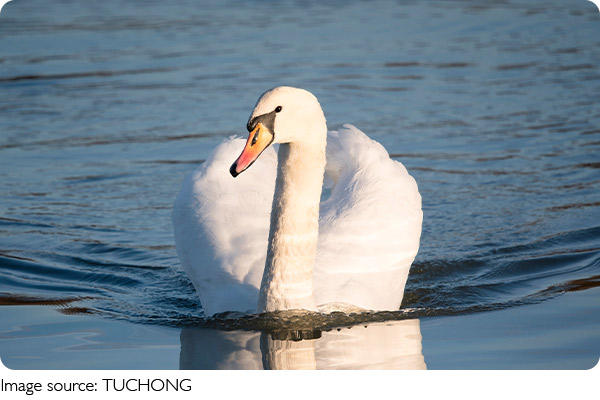
Swans are often celebrated for their grace and beauty, gliding across lakes with seemingly serene composure.
However, beneath this elegant exterior lies a complex system of communication that allows swans to navigate social interactions, maintain territory, and strengthen pair bonds.
Vocal Communication: The Language of Swans
One of the primary ways swans interact is through vocalizations. Unlike the gentle honks commonly associated with geese, swans produce a diverse range of calls that convey specific messages. These calls vary in tone, volume, and rhythm, each serving a different purpose.
For example, the trumpeter swan produces deep, resonant calls that can carry over long distances, alerting others to potential threats or marking territorial boundaries. Tundra swans, on the other hand, emit high-pitched whistles during flight or when signaling distress. These vocal cues are critical during migration, allowing flock members to maintain cohesion over vast distances.
In addition to warning and coordinating group movement, vocalizations play a role in courtship and pair bonding. Mated swans often engage in synchronized calls, a behavior known as duetting, which reinforces their lifelong bond. These duets are not merely decorative; they communicate commitment, strength, and mutual recognition to both the partner and neighboring swans.
Swans communicating with each other
The Swan Family and Friends
Body Language and Posturing
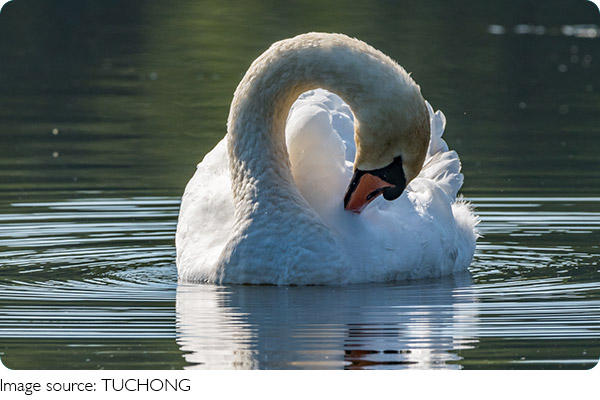
Swans are highly expressive through their posture and movements. The position of their neck, wings, and head communicates mood and intent. A swan raising its wings and arching its neck can signal aggression or dominance, particularly when defending territory or competing for mates. Conversely, a relaxed, low neck posture indicates calmness and non-threatening intent.
During courtship, swans engage in elaborate displays, including head bobbing, synchronized swimming, and wing flapping. These movements convey attraction, readiness to mate, and social alignment. Observing these gestures closely reveals the subtleties of swan interactions—what might appear as simple elegance is actually a sophisticated form of nonverbal communication.
Touch and Physical Interaction
Physical contact is another essential form of communication among swans. Mated pairs frequently preen each other’s feathers, a behavior called allopreening, which strengthens their bond and promotes cooperation. This tactile interaction not only fosters intimacy but also ensures feather health, which is crucial for insulation and flight.
Parents use touch to communicate with cygnets as well. Gentle nudges or protective movements guide young swans, signaling safety or prompting them to follow. These interactions highlight swans’ reliance on physical cues in combination with vocalizations to maintain family cohesion and survival.
Visual Signals and Territory Marking
Visual cues complement swans’ vocal and tactile communication. Their striking white plumage against water surfaces can act as a warning signal to intruders, particularly when combined with aggressive posturing. Swans are territorial birds; visual displays such as wing spreading, neck arching, and circling are used to intimidate potential rivals without resorting to physical conflict.
Territory defense also involves subtle environmental markers. Swans may use repeated pathways, nest locations, or water markings as visual signals to communicate occupancy to other swans. These environmental cues reduce direct confrontations while asserting presence and dominance.
Coordinated Group Communication
Swans are social birds, often found in family groups or large flocks during migration. Communication in these groups relies on a combination of calls, gestures, and synchronized movement. In flight, swans maintain formation through constant vocal cues and wing signals, ensuring safety and efficiency during long migratory journeys.
Group communication also plays a role in foraging. Swans use subtle vocal signals to indicate food sources or alert others to danger, demonstrating a high level of social awareness and cooperative behavior. This combination of vocal, visual, and tactile communication allows swans to maintain complex social networks and adapt to changing environmental conditions.
Swans communicate through a sophisticated blend of vocalizations, body language, tactile interaction, visual signals, and coordinated group behaviors. Observing a swan’s honk, posture, or gentle touch unveils a silent language, one that tells stories of connection, cooperation, and survival across lakes, rivers, and skies.